We may earn a commission when you buy through links on this site, at no extra cost to you. Learn more

Buying guide · Updated November 2026

The Best Portable Power Stations of 2026

Portable power stations have gotten dramatically better in the last two years. LiFePO4 batteries that last 3,000+ cycles are now standard in new models, wall charging has dropped from 6–8 hours to around one, and 1kWh units finally weigh under 25 pounds.

We compare every model on the same scale: capacity, continuous output, charge speed, battery technology, portability, solar input and value. We use manufacturer specs we've verified against official spec sheets and independent reviews, never marketing guesses. Here are the stations we recommend right now, and how to pick the right size for you.

Our picks

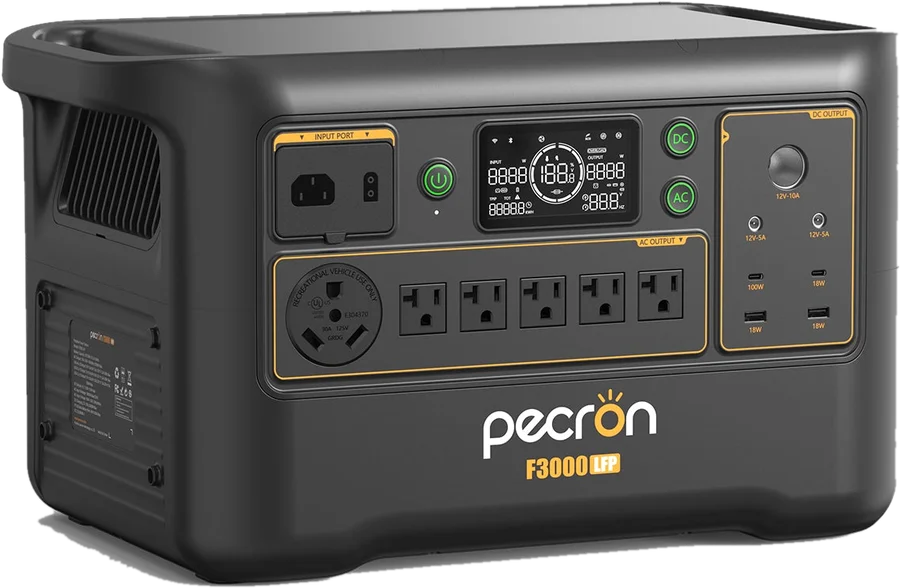
#1PECRON F3000LFP Portable Power Station (3072Wh)

Best value per watt-hour

PECRON F3000LFP

8.9/10
WattLab Score

3,072Wh of LiFePO4, a 3,600W inverter with a 30A RV outlet and 1,600W of solar input for less than many 2kWh stations. Its UPS is slower (8–20 ms) and it weighs 63 lb, but nothing else here gives you more battery per dollar.

  • 3,072 WhCapacity
  • 3,600 WAC output
  • LiFePO4Battery
  • 63.3 lbWeight

Pros: 3,072Wh LiFePO4 at an exceptional price per watt-hour; 3,600W continuous with a 30A TT-30R RV outlet; 1,600W solar input (25–120V).

Cons: UPS switchover of 8–20 ms is slower than 10 ms rivals; 63.3 lb without the optional cart.
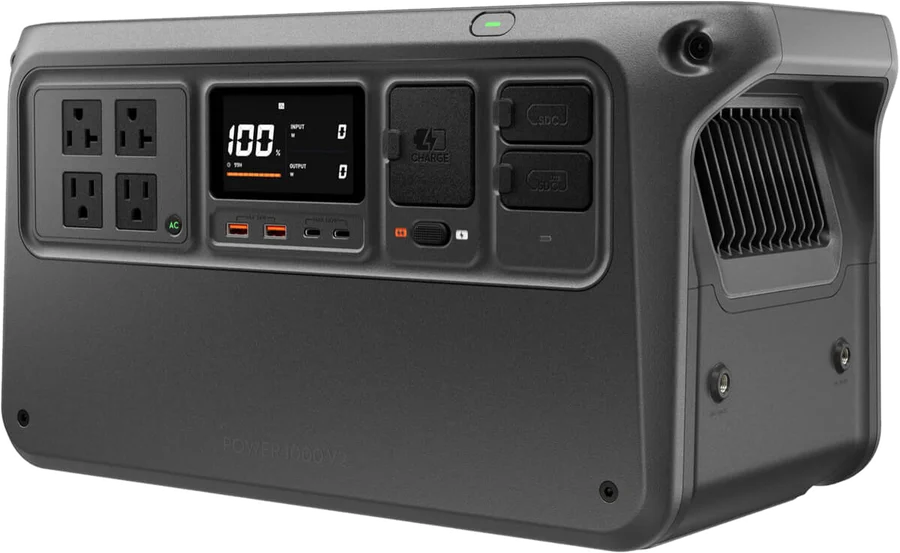
#2DJI Power 1000 V2 Portable Power Station

Best overall 1kWh station

DJI Power 1000 V2

8.7/10
WattLab Score

The most capable 1kWh station we cover: a 2,600W inverter that runs heaters and power tools, a 56-minute wall recharge, a 10 ms UPS and room to expand past 11kWh. Budget for DJI's adapters if you want solar or car charging.

  • 1,024 WhCapacity
  • 2,600 WAC output
  • LiFePO4Battery
  • 31.3 lbWeight

Pros: 2,600W continuous output runs heaters, microwaves and power tools; Full wall recharge in about 56 minutes (0–80% in 37); 10 ms UPS switchover and a quiet 26 dB.

Cons: Solar and car charging need DJI adapters sold separately; No built-in 12V car socket or DC5521 ports.

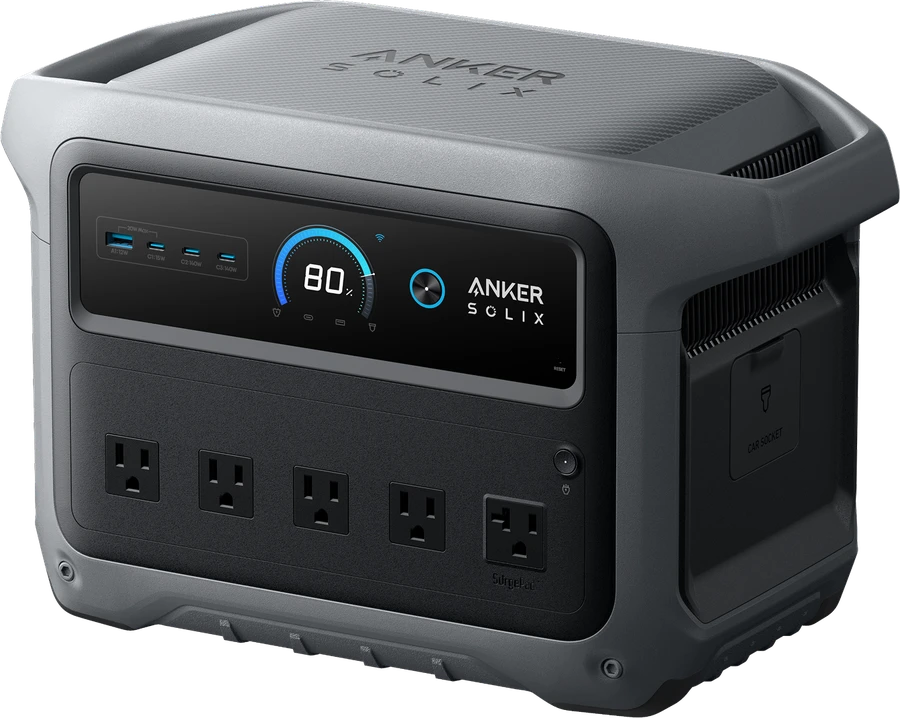
#3Anker SOLIX C1000 Gen 2 Portable Power Station

Also great

Anker SOLIX C1000 Gen 2

8.7/10
WattLab Score

Anker's C1000 Gen 2 puts 1,024Wh of LiFePO4 and a 2,000W inverter (3,000W surge) into a 24.9 lb box. It refills from the wall in 49 minutes with UltraFast Charging, takes up to 600W of solar and switches to battery in 10 ms.

  • 1,024 WhCapacity
  • 2,000 WAC output
  • LiFePO4Battery
  • 24.9 lbWeight

Pros: 2,000W continuous / 3,000W surge, high for 1kWh; Full recharge in 49 min with UltraFast Charging; Up to 600W solar input.

Cons: Can't add an expansion battery, unlike the original C1000; UltraFast Charging needs the app and a battery above 68°F.

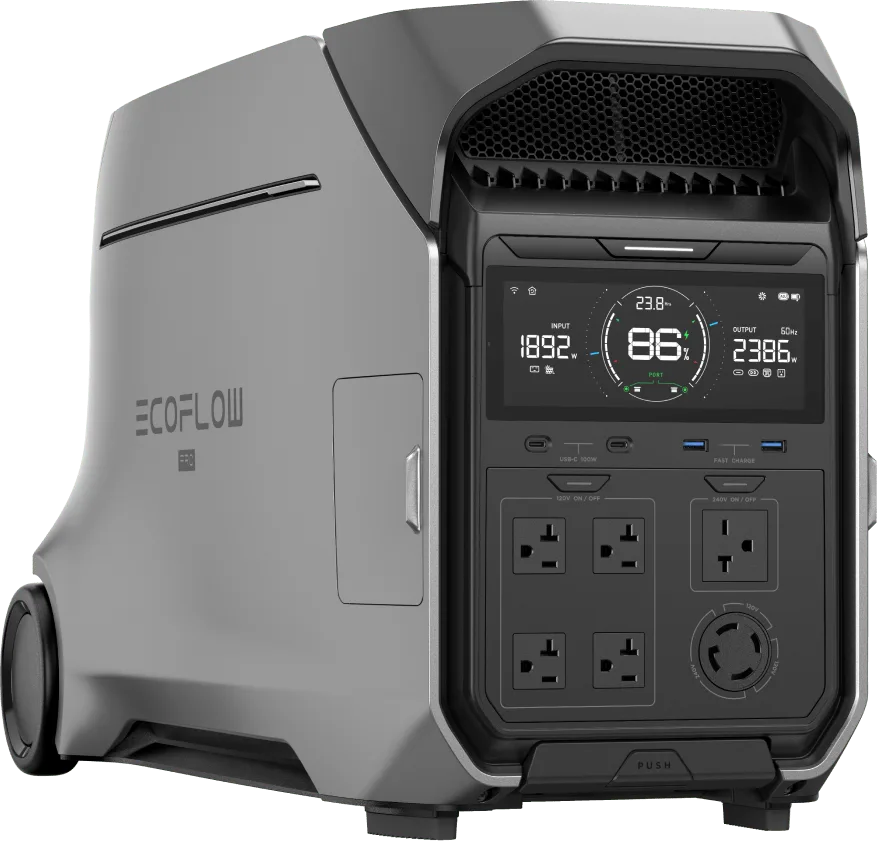
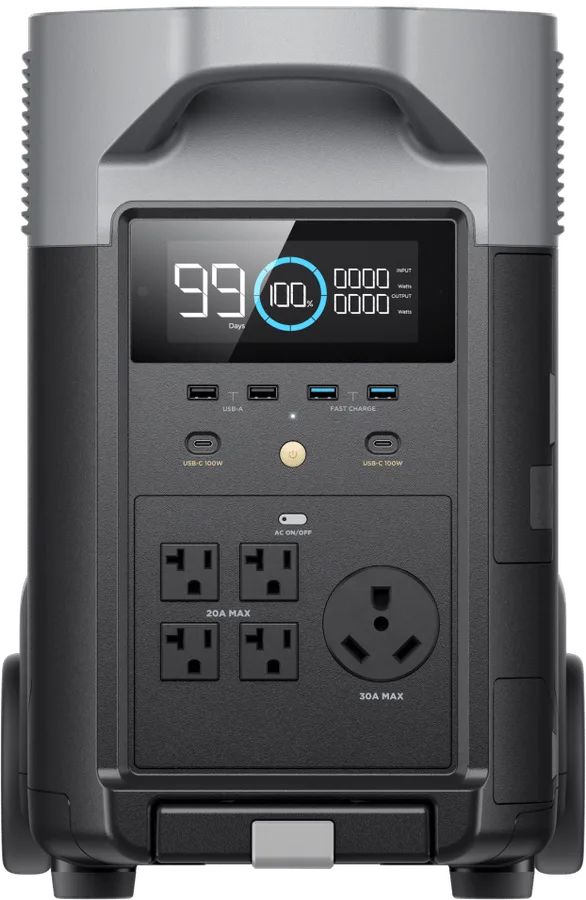
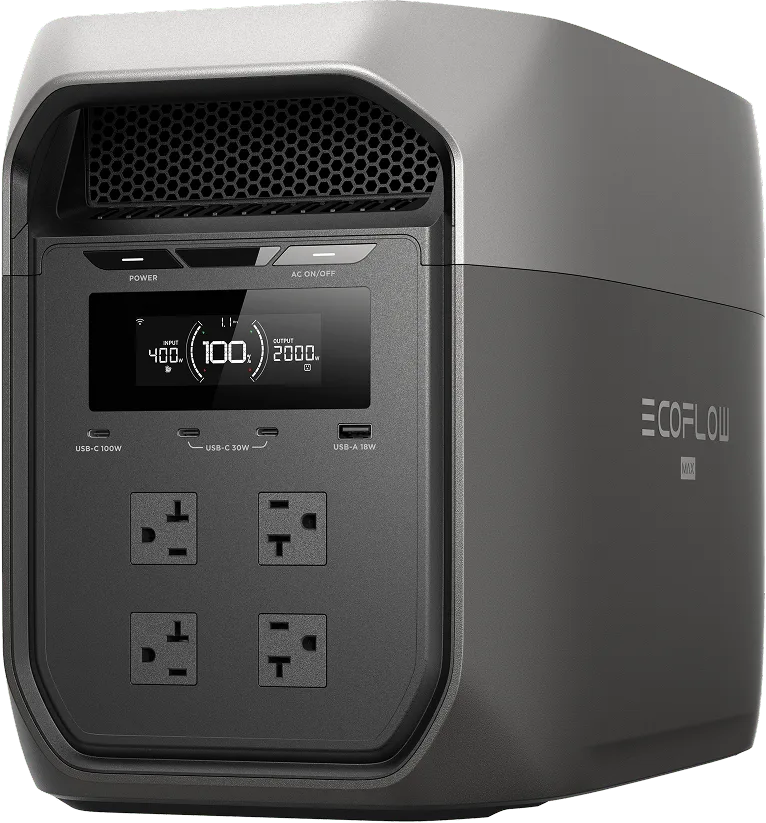
#4EcoFlow DELTA Pro 3 Portable Power Station (4096Wh)

Best for 240V home backup

EcoFlow DELTA Pro 3

8.4/10
WattLab Score

4,096Wh, 4,000W at both 120V and 240V, a 10 ms UPS and 2,600W of solar, expandable to 48kWh. It's heavy and expensive, but it can run well pumps and dryer circuits that 120V stations can't.

  • 4,096 WhCapacity
  • 4,000 WAC output
  • LiFePO4Battery
  • 113.5 lbWeight

Pros: 120V and 240V output, 4,000W continuous and 8,000W surge; 4,096Wh LiFePO4 rated for 4,000 cycles, expandable to 48kWh; 2,600W solar input across two ports.

Cons: 113.5 lb, so you roll it rather than carry it; Expensive, and home integration needs extra EcoFlow hardware.

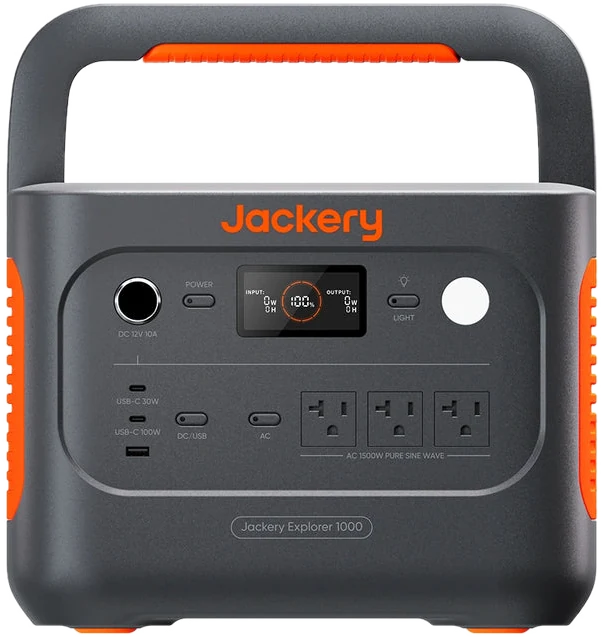
#5Jackery Explorer 1000 v2 Portable Power Station

Best value 1kWh all-rounder

Jackery Explorer 1000 v2

8.3/10
WattLab Score

1,070Wh of LiFePO4 and a 1,500W inverter in a 23.8 lb body that recharges in about an hour. It's cheaper than the DJI, has solar and car inputs built in, and is small enough to bring camping.

  • 1,070 WhCapacity
  • 1,500 WAC output
  • LiFePO4Battery
  • 23.8 lbWeight

Pros: 1,070Wh LiFePO4 in a 23.8 lb, car-trunk-friendly body; 1,500W continuous / 3,000W surge runs coffee makers and microwaves; About 1-hour full recharge in Emergency mode.

Cons: Only one USB-A and no DC5521 barrel ports; Not expandable with add-on batteries.

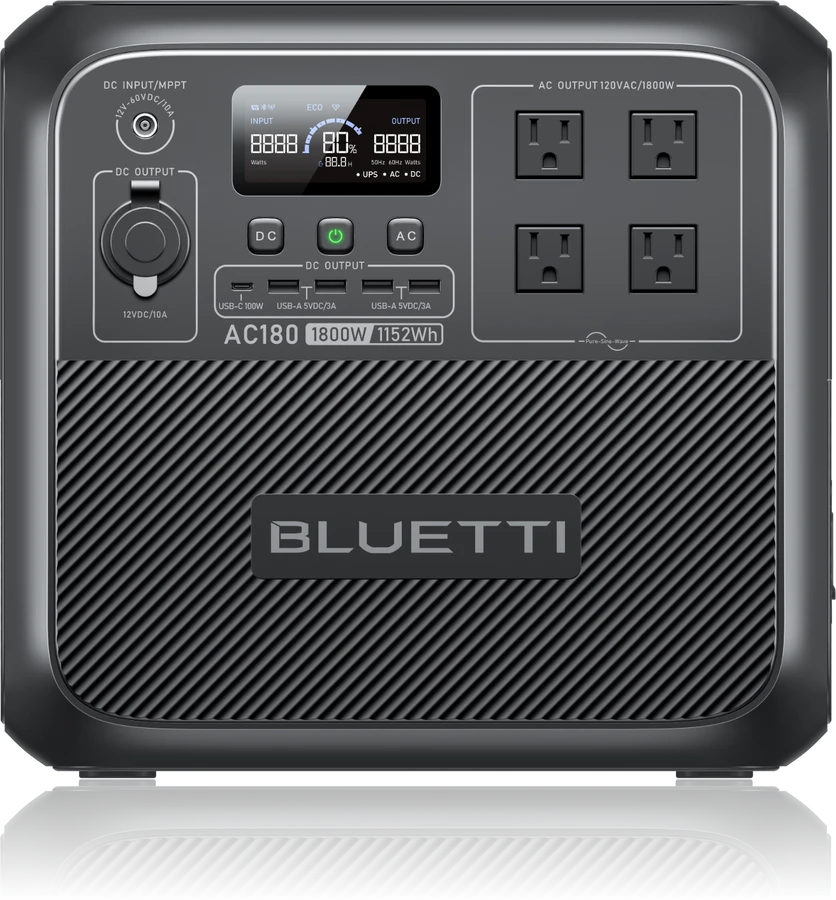
#6BLUETTI AC180 Portable Power Station

Also great

BLUETTI AC180

8.3/10
WattLab Score

BLUETTI's AC180 delivers 1,152Wh of LiFePO4 and 1,800W from four AC outlets, with a 2,700W Power Lifting mode for heating appliances. It recharges in 1.3–1.8 hours from the wall and takes up to 500W of solar.

  • 1,152 WhCapacity
  • 1,800 WAC output
  • LiFePO4Battery
  • 35.3 lbWeight

Pros: 1,152Wh LiFePO4 with 3,500+ cycles; 1,800W output, 2,700W Power Lifting for heating appliances; 1.3–1.8 hr wall recharge with Turbo Charging.

Cons: 20 ms UPS is slower than 10 ms rivals; About 35 lb, heavier than newer 1kWh units.

#7EcoFlow DELTA Pro Portable Power Station (3600Wh)

Best proven big battery

EcoFlow DELTA Pro

8.1/10
WattLab Score

The original 3.6kWh DELTA Pro now costs much less, and still offers a 3,600W inverter, 1,600W solar input, 15 outputs and expansion batteries. It's a 99 lb unit on wheels, so it's for the home, not the campsite.

  • 3,600 WhCapacity
  • 3,600 WAC output
  • LiFePO4Battery
  • 99 lbWeight

Pros: 3,600Wh LiFePO4 with 3,500 cycles to 80%; 3,600W continuous, 7,200W surge and 4,500W X-Boost; 1,600W solar input (11–150V).

Cons: 99 lb is a two-person lift; No published UPS switchover time (EPS mode).

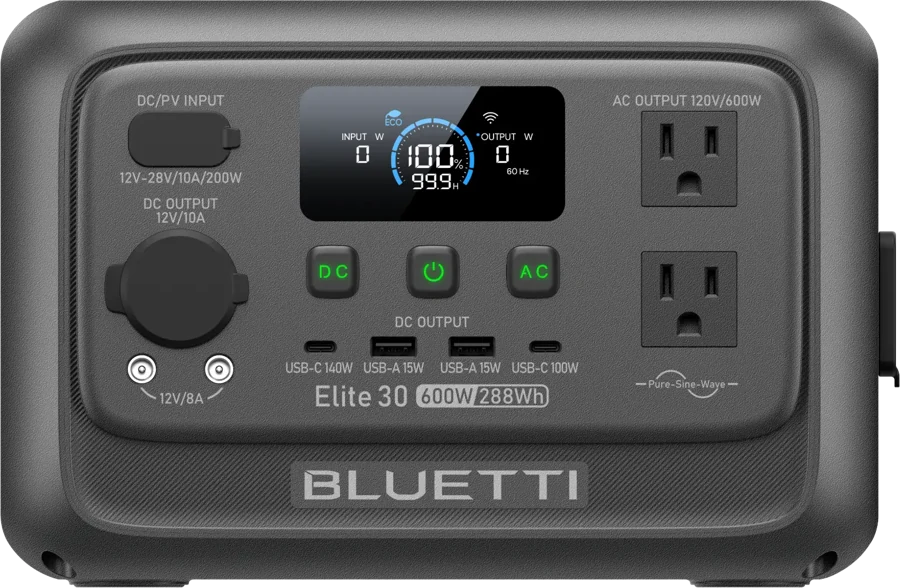
#8BLUETTI Elite 30 V2 Portable Power Station

Best ultra-portable

BLUETTI Elite 30 V2

8.0/10
WattLab Score

A 9.5 lb LiFePO4 station with a genuine 600W inverter, a 140W USB-C port and a 70-minute full recharge. The best small unit for laptops, CPAPs and routers.

  • 288 WhCapacity
  • 600 WAC output
  • LiFePO4Battery
  • 9.48 lbWeight

Pros: LiFePO4 battery rated for 3,000+ cycles; Full recharge from AC in about 70 minutes, no external brick; 140W USB-C PD 3.1 port fast-charges big laptops.

Cons: 288Wh is small for fridges or long outages; No battery expansion option.

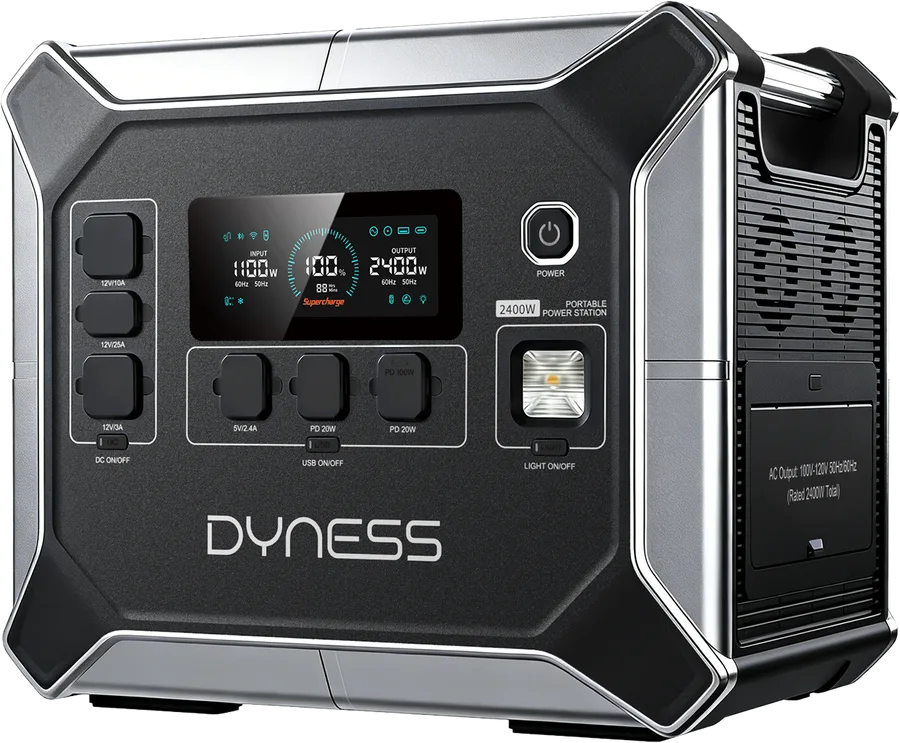
#9DYNESS PPS2400 Portable Power Station (2048Wh)

Budget 2kWh pick

DYNESS PPS2400

8.0/10
WattLab Score

2,048Wh of LiFePO4, a 2,400W inverter and six AC outlets for about $700. Charging is slower (1,100W AC, 500W solar), so it suits buyers who recharge overnight.

  • 2,048 WhCapacity
  • 2,400 WAC output
  • LiFePO4Battery
  • 48.5 lbWeight

Pros: 2,048Wh LiFePO4 rated for 4,000+ cycles at a low price; 2,400W inverter with six AC outlets; Four USB-C ports including one 100W.

Cons: Slow 1,100W AC charging (about 2.3 hours to full); Solar input limited to 500W.

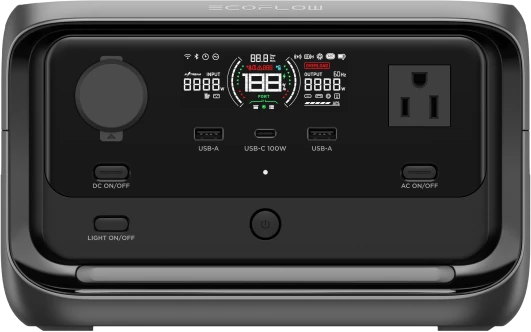
#10EcoFlow RIVER 3 Plus Portable Power Station with EB300 Extra Battery (572Wh)

Also great

EcoFlow RIVER 3 Plus + EB300

7.4/10
WattLab Score

The RIVER 3 Plus pairs a 286Wh LiFePO4 power station with a clip-on 286Wh EB300 battery for 572Wh in total. It switches to battery in under 10 ms, runs at about 30 dB and puts out 600W from three AC outlets.

  • 572 WhCapacity
  • 600 WAC output
  • LiFePO4Battery
  • 18.1 lbWeight

Pros: Under-10 ms UPS switchover, measured at 9 ms by StorageReview; 572Wh LiFePO4 across two clip-together units; About 30 dB, quiet enough for a bedroom or office.

Cons: 600W output limits it to small appliances; Charge times EcoFlow quotes are for the main unit only.

#11EcoFlow DELTA 3 Max Portable Power Station (2048Wh)

Best 2kWh with a fast UPS

EcoFlow DELTA 3 Max

7.3/10
WattLab Score

2,048Wh of LiFePO4 with a 2,400W inverter, a 10 ms UPS, a quiet 25 dB and 0–80% wall charging in 68 minutes. Solar input is limited to 500W.

  • 2,048 WhCapacity
  • 2,400 WAC output
  • LiFePO4Battery
  • 44.8 lbWeight

Pros: 2,048Wh LiFePO4 for well under $1,000 at EcoFlow's current price; 2,400W continuous, 4,800W surge and 3,400W X-Boost; 10 ms UPS switchover and a quiet 25 dB.

Cons: Solar input tops out at 500W; Expansion batteries are a Max Plus feature, not this model.

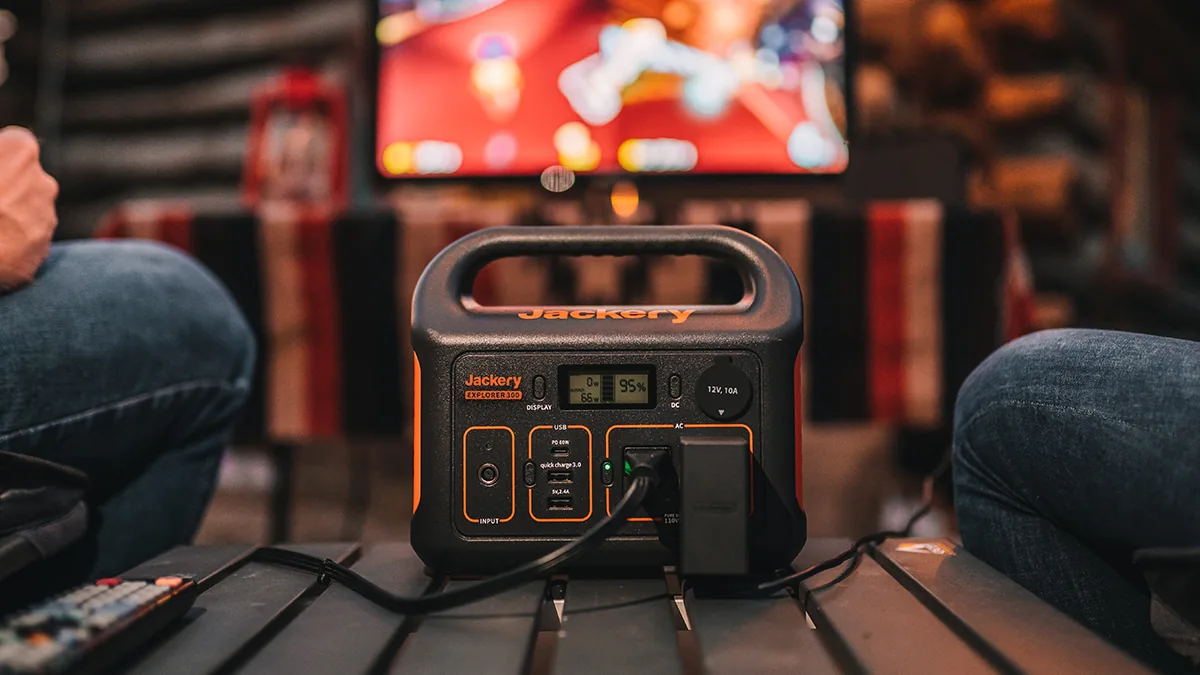
#12Jackery Explorer 300 Portable Power Station

Lightest proven pick

Jackery Explorer 300

5.2/10
WattLab Score

At 7.1 lb with USB-C input and output, the original Explorer 300 is still a great camera-and-drone companion. Just know its NMC battery wears out faster than LiFePO4 rivals.

  • 293 WhCapacity
  • 300 WAC output
  • Li-ion (NMC)Battery
  • 7.1 lbWeight

Pros: Very light at 7.1 lb with a sturdy carry handle; USB-C PD port charges laptops and doubles as a 60W input; Dual charging (wall + USB-C) refills in about 2.5 hours.

Cons: Original NMC battery: ~500 cycles to 80%; 300W inverter can't run kettles, coffee makers or heaters.

Specs at a glance

ModelCapacityAC outputBatteryFastest chargeWeightScore
PECRON F3000LFP3,072 Wh3,600 WLiFePO41.5 hr63.3 lb8.9
DJI Power 1000 V21,024 Wh2,600 WLiFePO456 min31.3 lb8.7
Anker SOLIX C1000 Gen 21,024 Wh2,000 WLiFePO449 min24.9 lb8.7
EcoFlow DELTA Pro 34,096 Wh4,000 WLiFePO4—113.5 lb8.4
Jackery Explorer 1000 v21,070 Wh1,500 WLiFePO41 hr23.8 lb8.3
BLUETTI AC1801,152 Wh1,800 WLiFePO478 min35.3 lb8.3
EcoFlow DELTA Pro3,600 Wh3,600 WLiFePO41.8 hr99 lb8.1
BLUETTI Elite 30 V2288 Wh600 WLiFePO470 min9.48 lb8.0
DYNESS PPS24002,048 Wh2,400 WLiFePO42.3 hr48.5 lb8.0
EcoFlow RIVER 3 Plus + EB300572 Wh600 WLiFePO4—18.1 lb7.4
EcoFlow DELTA 3 Max2,048 Wh2,400 WLiFePO4—44.8 lb7.3
Jackery Explorer 300293 Wh300 WLi-ion (NMC)2.5 hr7.1 lb5.2

Compare these in the interactive comparator

How much capacity do you need?

Capacity in watt-hours (Wh) is your fuel tank. To estimate runtime, multiply capacity by about 0.85 (the inverter's typical efficiency) and divide by your device's watts. A 288Wh unit gives about 245Wh through AC: around 4 hours for a 60W laptop. A 1,070Wh unit gives about 910Wh: roughly 6–9 hours for an average refrigerator.

  • Under 500Wh: phones, cameras, drones, laptops, lights, a CPAP for about one night.
  • 500–1,500Wh: refrigerator for a day, coffee makers and microwaves in short bursts, work-from-home during outages.
  • 2,000Wh+: multi-day outages, multiple large appliances, RV living.

LiFePO4 vs. lithium-ion (NMC)

LiFePO4 (lithium iron phosphate) has taken over the category for good reason: manufacturers rate it for 3,000–4,000 charge cycles versus roughly 500–800 for the NMC lithium-ion used in earlier models, and it's more resistant to thermal runaway. NMC is lighter per Wh, which is why some older ultralight units still use it. If you'll use the station weekly, LiFePO4 is worth it.

Continuous watts, surge and 'power lifting'

The continuous AC rating is what the inverter can sustain. Surge (or peak) covers the brief startup spike of motors and compressors. Some brands add a 'power lifting' or 'voltage-reduction' mode that lets heating appliances like kettles run on an undersized inverter at reduced power. It's useful, but it's not the same as a bigger inverter.

Charging speed and solar input

Fast AC charging (1–2 hours) is the most underrated spec for outages: it lets you refill whenever the grid flickers back. For off-grid use, the maximum solar input caps how fast panels can recharge the battery. Plan on roughly 4–5× the panel wattage in Wh per clear day.

Frequently asked questions

What is the best portable power station for most people?

For most households, a 1kWh-class LiFePO4 station like the Jackery Explorer 1000 v2 is the sweet spot: enough for a fridge during an outage, but still portable.

Are portable power stations worth it?

If you camp, work remotely, or live where outages happen, yes. They're silent, fume-free, safe indoors and need almost no maintenance compared with gas generators.

How long do portable power stations last?

LiFePO4 models are typically rated for 3,000–4,000 cycles to 70–80% capacity, which is more than 10 years of weekly use. Older NMC models are rated for about 500–800 cycles.