We may earn a commission when you buy through links on this site, at no extra cost to you. Learn more

Buying guide · Home backup · Updated November 2026

Best Solar Generators for Home Backup

A solar generator won't replace a whole-home standby system, but for most outages you don't need one. What you need is a fridge that stays cold, Wi-Fi that stays on, phones that stay charged and, for many families, a CPAP that runs all night. A 1kWh-class battery covers that, and solar panels stretch it into days.

Below you'll find a sizing table for common appliances, what to look for in a backup unit, and our current picks ranked by how much of your home they can keep running.

Our picks

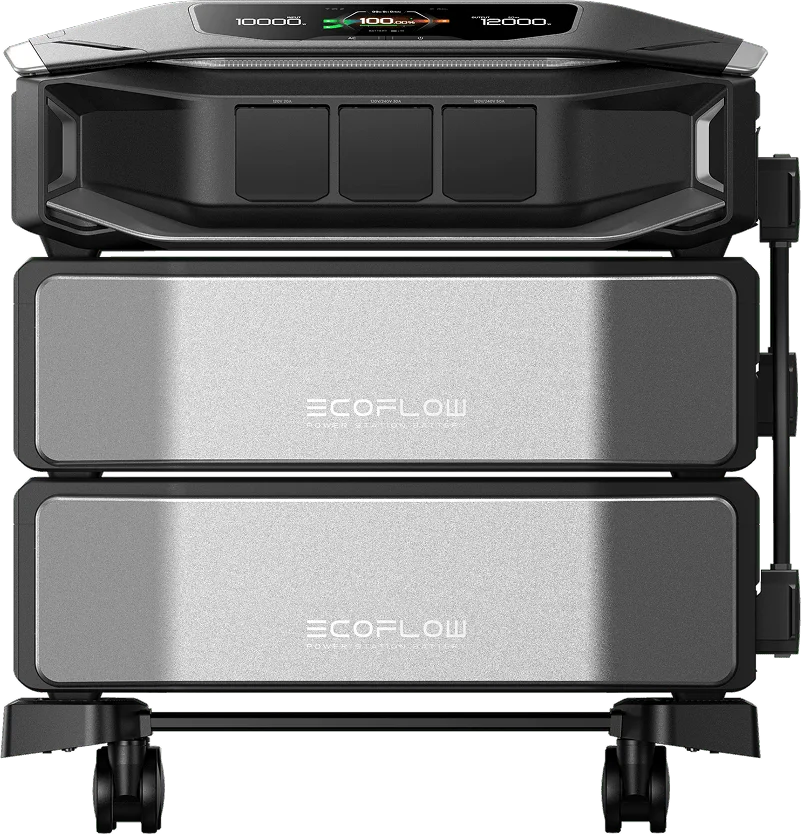
#1EcoFlow DELTA Pro Ultra X Whole-Home Backup (12,288Wh)

Most powerful whole-home system

EcoFlow DELTA Pro Ultra X

7.1/10
WattLab Score

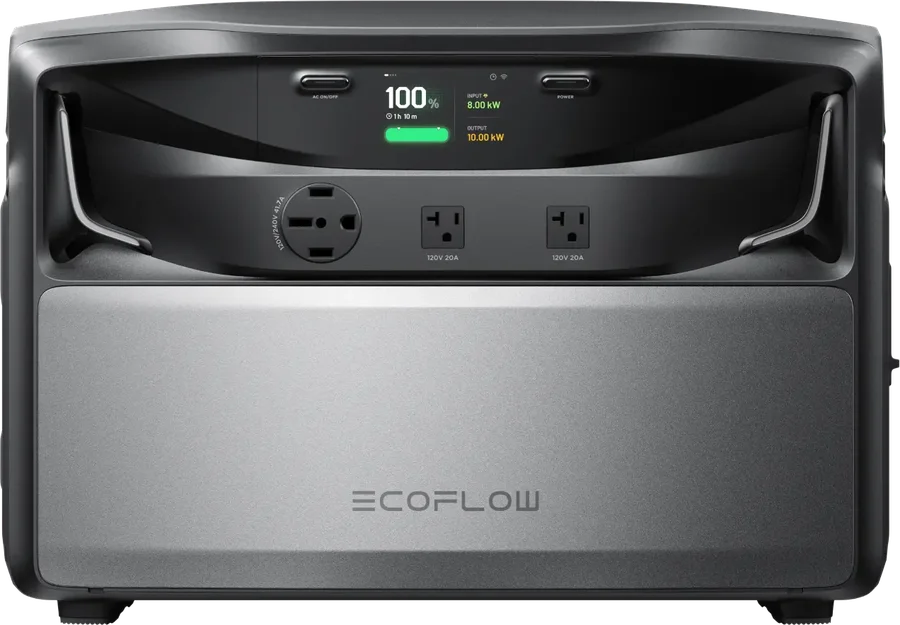
12kW of 120/240V output, 12,288Wh to start and up to 10kW of solar, with a sub-10 ms switchover. It scales to 184kWh, but plan on professional installation and a smart panel to use it fully.

  • 12,288 WhCapacity
  • 12,000 WAC output
  • LiFePO4Battery
  • 292.6 lbWeight

Pros: 12kW split-phase output (120/240V) for whole-home loads; 12,288Wh to start, expandable to 61kWh per inverter and 184kWh total; 10kW solar input across two high-voltage ports.

Cons: Expensive, and whole-home use needs a smart panel and an electrician; About 293 lb across inverter and batteries.
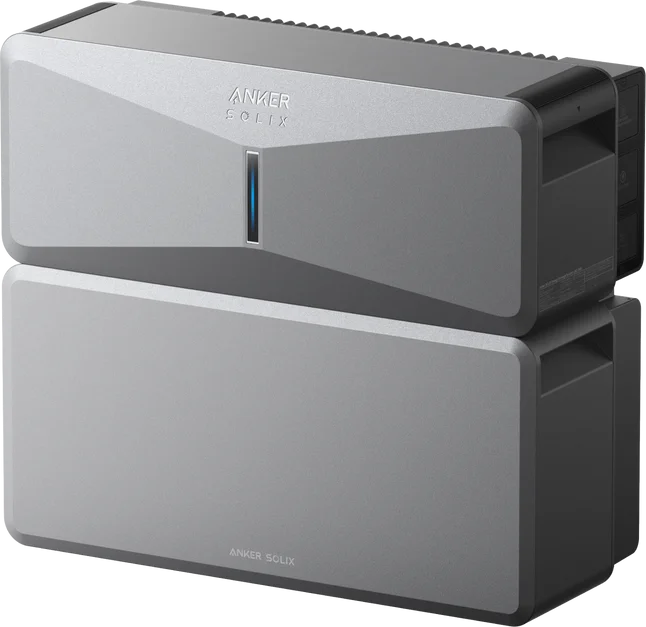
#2Anker SOLIX E10 Whole-Home Backup (12kWh with Power Dock)

Best standby-generator replacement

Anker SOLIX E10

7.1/10
WattLab Score

A weatherproof (IP66) home battery with a 200A Power Dock that switches the whole house over in under 20 ms, and enough surge (37.2kW) to start a 5-ton central AC. Installed at your panel by an electrician.

  • 12,288 WhCapacity
  • 7,680 WAC output
  • LiFePO4Battery
  • 320.6 lbWeight

Pros: 7,680W continuous, 10kW Turbo and 37.2kW surge for 5-ton AC; 12,288Wh to start, expandable to 90kWh; Automatic whole-home switchover in ≤20 ms via the 200A Power Dock.

Cons: Requires professional installation at the main panel; Very heavy: 130 lb per battery module.

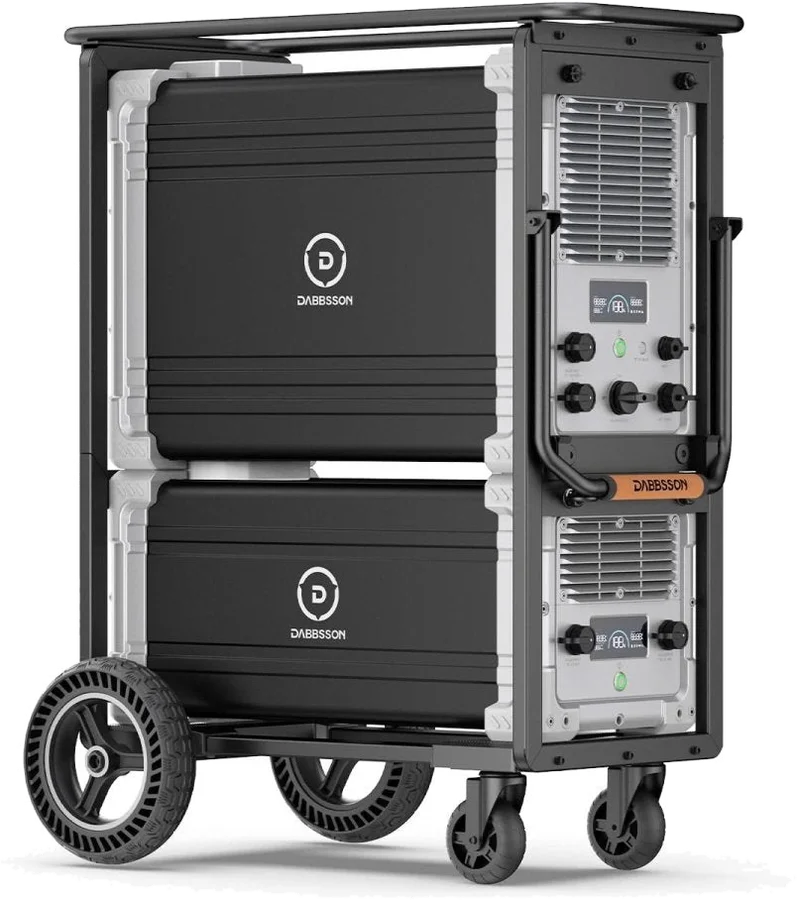
#3DABBSSON Turbo 12000 Home Backup Power Station (10,648Wh)

Fastest-charging whole-home pick

DABBSSON Turbo 12000

7.6/10
WattLab Score

10,648Wh and 12,000W at 240V on a wheeled cart, refilling in under 1.3 hours from an EV-charger input or up to 11kW of solar. Only 6,000W is available at 120V, and it's a newer system with few reviews.

  • 10,648 WhCapacity
  • 12,000 WAC output
  • LiFePO4Battery

Pros: 12,000W at 240V; two units reach 24kW; 10,648Wh semi-solid-state LFP rated for 4,500 cycles; Under 1.3-hour recharge from a 9.1kW EV-charger input.

Cons: Only 6,000W available at 120V; 169.7 lb main unit.

#4EcoFlow DELTA Pro 3 + Smart Extra Battery (8,192Wh)

Best multi-day portable backup

EcoFlow DELTA Pro 3 + Extra Battery

8.2/10
WattLab Score

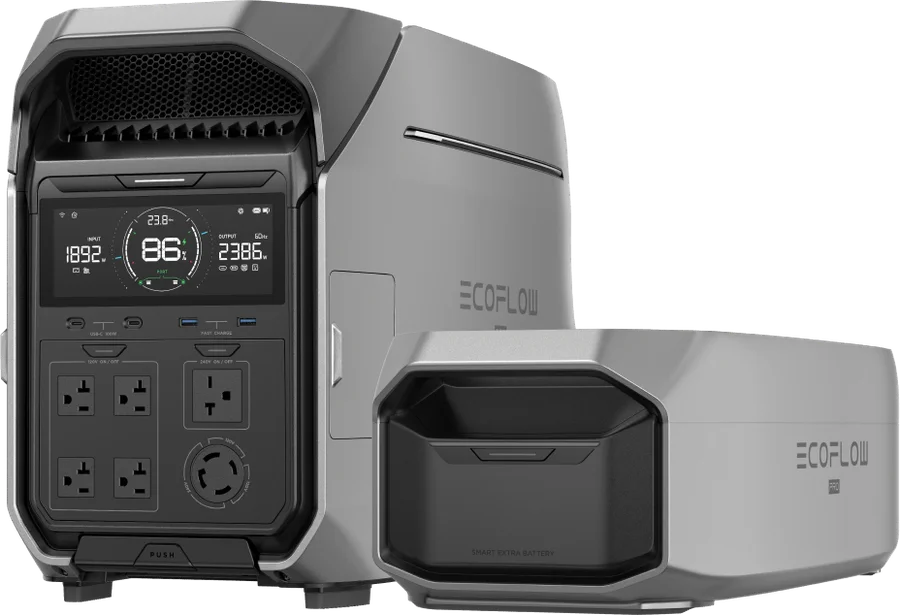
The DELTA Pro 3 with a second 4kWh battery: 8,192Wh, 4,000W at 120V and 240V and a 10 ms UPS, with no permanent installation required. Refill it from 240V, solar or a generator, since a 120V outlet is slow for 8kWh.

  • 8,192 WhCapacity
  • 4,000 WAC output
  • LiFePO4Battery

Pros: 8,192Wh LiFePO4, enough for multi-day essentials backup; 4,000W at both 120V and 240V, 8,000W surge; 10 ms UPS switchover.

Cons: Slow to refill from a 120V outlet (1,800W); Heavy: the main unit alone is 113.5 lb.

#5EcoFlow TITAN Plus Solar Generator (5,017Wh + 2 × 400W panels)

Best 240V battery + solar bundle

EcoFlow TITAN Plus + 800W Solar

6.8/10
WattLab Score

A 5kWh, 7,200W split-phase battery that takes up to 8kW of solar, bundled with two 400W portable panels to get started. Expandable to 30kWh and UL 9540 certified.

  • 5,017 WhCapacity
  • 7,200 WAC output
  • LiFePO4Battery
  • 121.3 lbWeight

Pros: 7,200W split-phase output (120/240V), up to 10kW with solar; 8,000W solar input across two high-voltage ports; Includes two 400W portable solar panels.

Cons: 121 lb and rated for indoor use (IP20); Full home integration needs the Smart Home Panel 10.

#6EcoFlow DELTA Pro 3 Portable Power Station (4096Wh)

Best portable 240V backup

EcoFlow DELTA Pro 3

8.4/10
WattLab Score

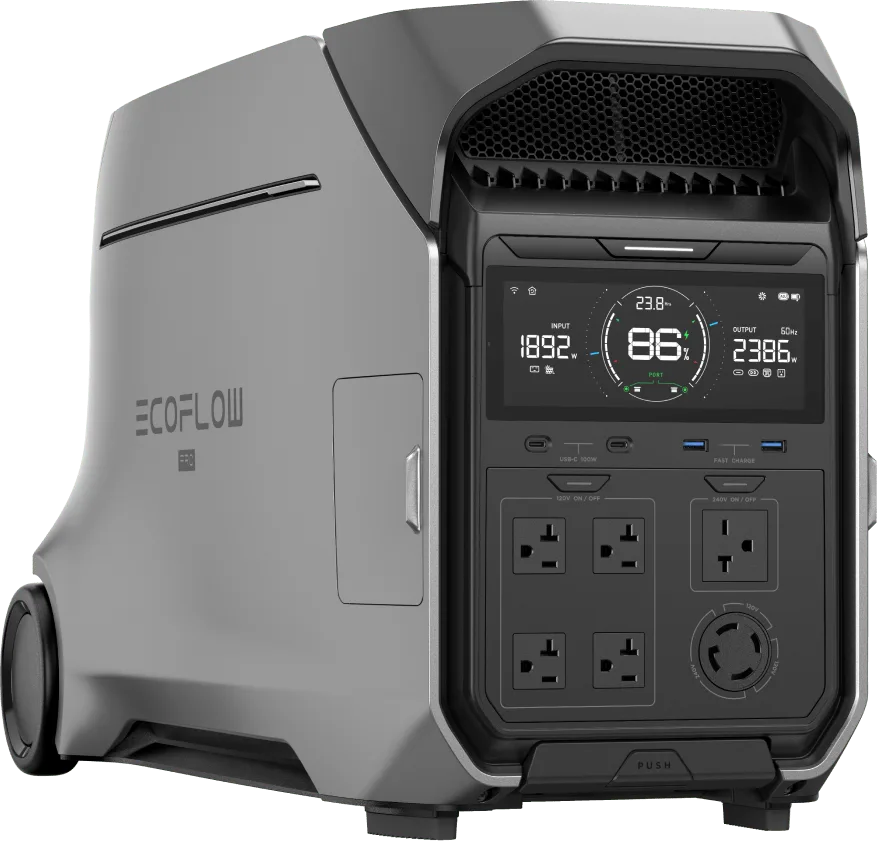
The only unit here with 240V output, so it can back up a well pump, dryer circuit or central AC compressor. 4,096Wh to start, 10 ms UPS, 2,600W of solar and expansion up to 48kWh with EcoFlow's system.

  • 4,096 WhCapacity
  • 4,000 WAC output
  • LiFePO4Battery
  • 113.5 lbWeight

Pros: 120V and 240V output, 4,000W continuous and 8,000W surge; 4,096Wh LiFePO4 rated for 4,000 cycles, expandable to 48kWh; 2,600W solar input across two ports.

Cons: 113.5 lb, so you roll it rather than carry it; Expensive, and home integration needs extra EcoFlow hardware.

#7EcoFlow DELTA Pro Portable Power Station (3600Wh)

Best big battery for the money

EcoFlow DELTA Pro

8.1/10
WattLab Score

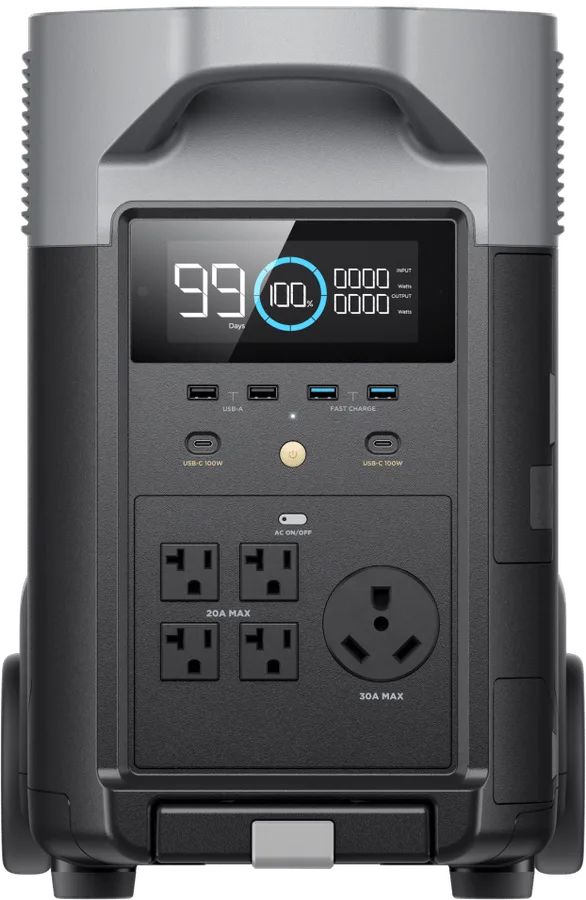
3,600Wh, a 3,600W inverter and 1,600W of solar input at a much lower price than when it launched. Expandable with extra batteries. Backup uses EcoFlow's EPS mode, with no published switchover time.

  • 3,600 WhCapacity
  • 3,600 WAC output
  • LiFePO4Battery
  • 99 lbWeight

Pros: 3,600Wh LiFePO4 with 3,500 cycles to 80%; 3,600W continuous, 7,200W surge and 4,500W X-Boost; 1,600W solar input (11–150V).

Cons: 99 lb is a two-person lift; No published UPS switchover time (EPS mode).

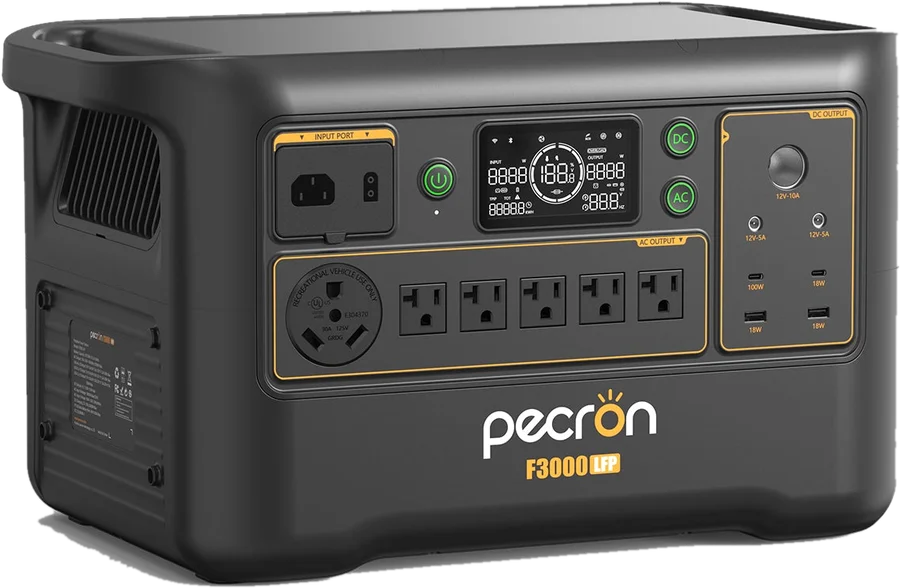
#8PECRON F3000LFP Portable Power Station (3072Wh)

Best value 3kWh backup

PECRON F3000LFP

8.9/10
WattLab Score

3,072Wh and 3,600W for under $1,000 at PECRON's price, with a TT-30R outlet for RV use. Expandable past 10kWh; its UPS (8–20 ms) suits fridges and lights better than PCs.

  • 3,072 WhCapacity
  • 3,600 WAC output
  • LiFePO4Battery
  • 63.3 lbWeight

Pros: 3,072Wh LiFePO4 at an exceptional price per watt-hour; 3,600W continuous with a 30A TT-30R RV outlet; 1,600W solar input (25–120V).

Cons: UPS switchover of 8–20 ms is slower than 10 ms rivals; 63.3 lb without the optional cart.

#9EcoFlow DELTA 3 Max Portable Power Station (2048Wh)

Best 2kWh with a fast UPS

EcoFlow DELTA 3 Max

7.3/10
WattLab Score

2,048Wh and 2,400W with a 10 ms UPS that protects computers and network gear, plus Storm Guard in the app to top up before bad weather.

  • 2,048 WhCapacity
  • 2,400 WAC output
  • LiFePO4Battery
  • 44.8 lbWeight

Pros: 2,048Wh LiFePO4 for well under $1,000 at EcoFlow's current price; 2,400W continuous, 4,800W surge and 3,400W X-Boost; 10 ms UPS switchover and a quiet 25 dB.

Cons: Solar input tops out at 500W; Expansion batteries are a Max Plus feature, not this model.

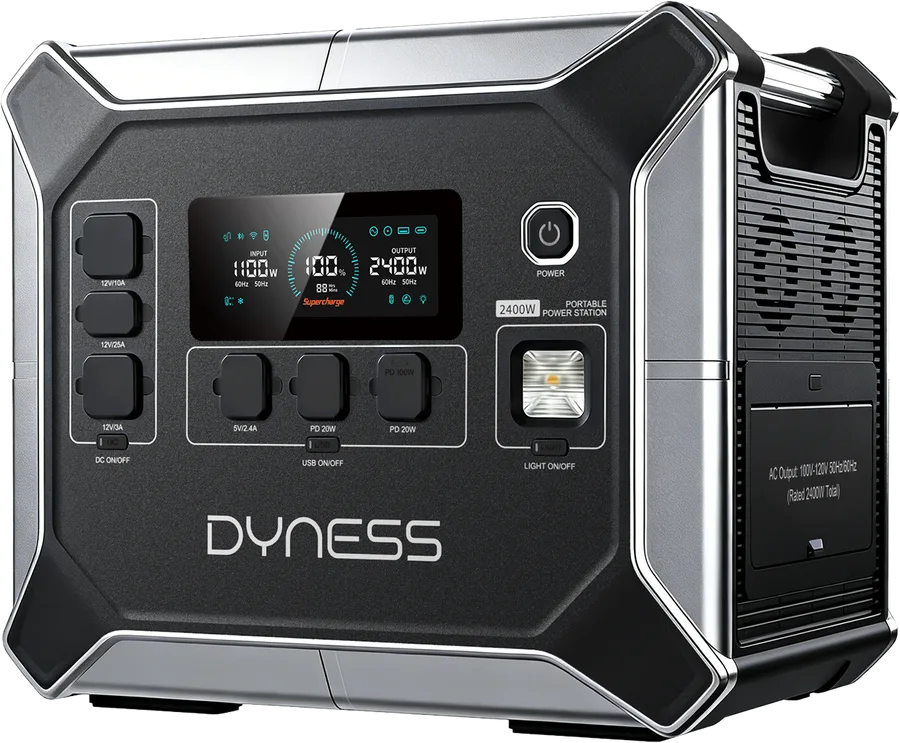
#10DYNESS PPS2400 Portable Power Station (2048Wh)

Budget 2kWh backup

DYNESS PPS2400

8.0/10
WattLab Score

Six AC outlets and 2,048Wh of LiFePO4 for about $700. Slower 1,100W charging means it's best kept topped up before storms.

  • 2,048 WhCapacity
  • 2,400 WAC output
  • LiFePO4Battery
  • 48.5 lbWeight

Pros: 2,048Wh LiFePO4 rated for 4,000+ cycles at a low price; 2,400W inverter with six AC outlets; Four USB-C ports including one 100W.

Cons: Slow 1,100W AC charging (about 2.3 hours to full); Solar input limited to 500W.

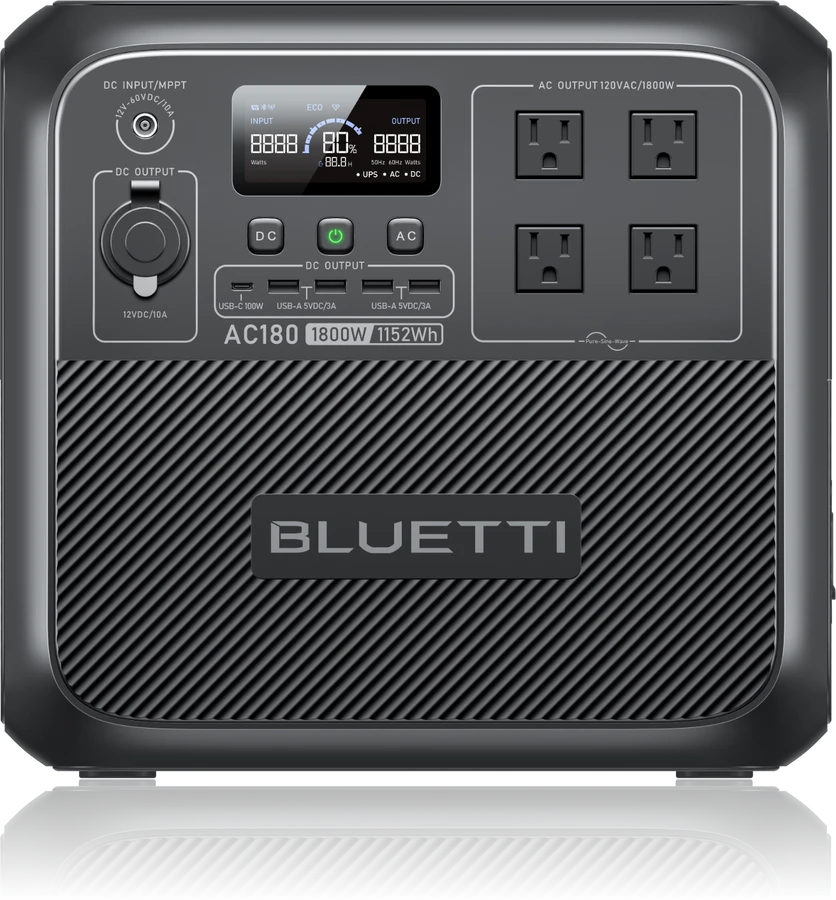
#11BLUETTI AC180 Portable Power Station

Also great

BLUETTI AC180

8.3/10
WattLab Score

BLUETTI's AC180 delivers 1,152Wh of LiFePO4 and 1,800W from four AC outlets, with a 2,700W Power Lifting mode for heating appliances. It recharges in 1.3–1.8 hours from the wall and takes up to 500W of solar.

  • 1,152 WhCapacity
  • 1,800 WAC output
  • LiFePO4Battery
  • 35.3 lbWeight

Pros: 1,152Wh LiFePO4 with 3,500+ cycles; 1,800W output, 2,700W Power Lifting for heating appliances; 1.3–1.8 hr wall recharge with Turbo Charging.

Cons: 20 ms UPS is slower than 10 ms rivals; About 35 lb, heavier than newer 1kWh units.

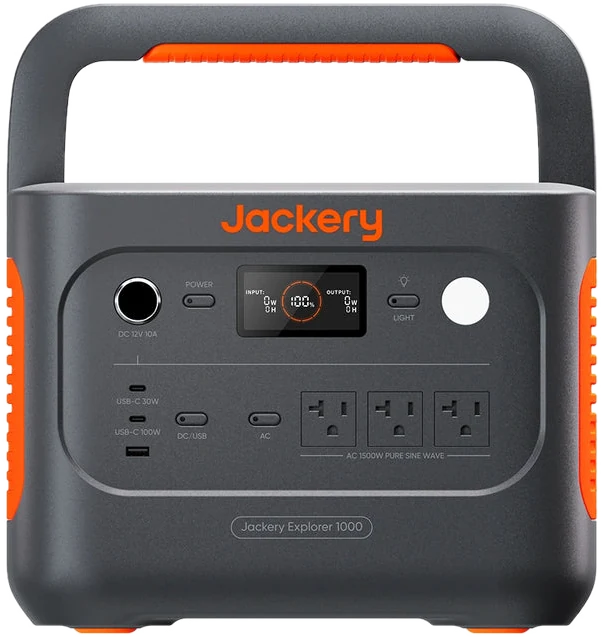
#12Jackery Explorer 1000 v2 Portable Power Station

Best compact 1kWh backup

Jackery Explorer 1000 v2

8.3/10
WattLab Score

1,070Wh, 1,500W continuous with a 3,000W surge for fridge compressors, three AC outlets, UPS mode and up to 400W of solar. It keeps a typical fridge running for roughly 6–9 hours, or essentials like Wi-Fi, lights and phones for well over a day, and refills in about an hour when the grid returns.

  • 1,070 WhCapacity
  • 1,500 WAC output
  • LiFePO4Battery
  • 23.8 lbWeight

Pros: 1,070Wh LiFePO4 in a 23.8 lb, car-trunk-friendly body; 1,500W continuous / 3,000W surge runs coffee makers and microwaves; About 1-hour full recharge in Emergency mode.

Cons: Only one USB-A and no DC5521 barrel ports; Not expandable with add-on batteries.

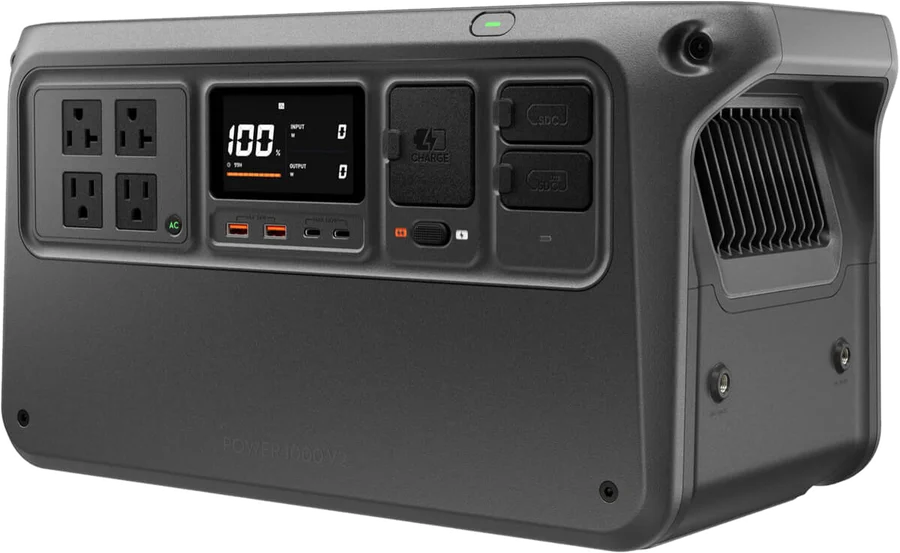
#13DJI Power 1000 V2 Portable Power Station

Best expandable 1kWh backup

DJI Power 1000 V2

8.7/10
WattLab Score

Starts at 1,024Wh but takes up to five Expansion Battery 2000 packs (11,264Wh total). Its 2,600W inverter handles space heaters and microwaves, and its 10 ms UPS switchover protects PCs and network gear. Solar needs a DJI adapter (400W MPPT module or 1,200W fast charger).

  • 1,024 WhCapacity
  • 2,600 WAC output
  • LiFePO4Battery
  • 31.3 lbWeight

Pros: 2,600W continuous output runs heaters, microwaves and power tools; Full wall recharge in about 56 minutes (0–80% in 37); 10 ms UPS switchover and a quiet 26 dB.

Cons: Solar and car charging need DJI adapters sold separately; No built-in 12V car socket or DC5521 ports.

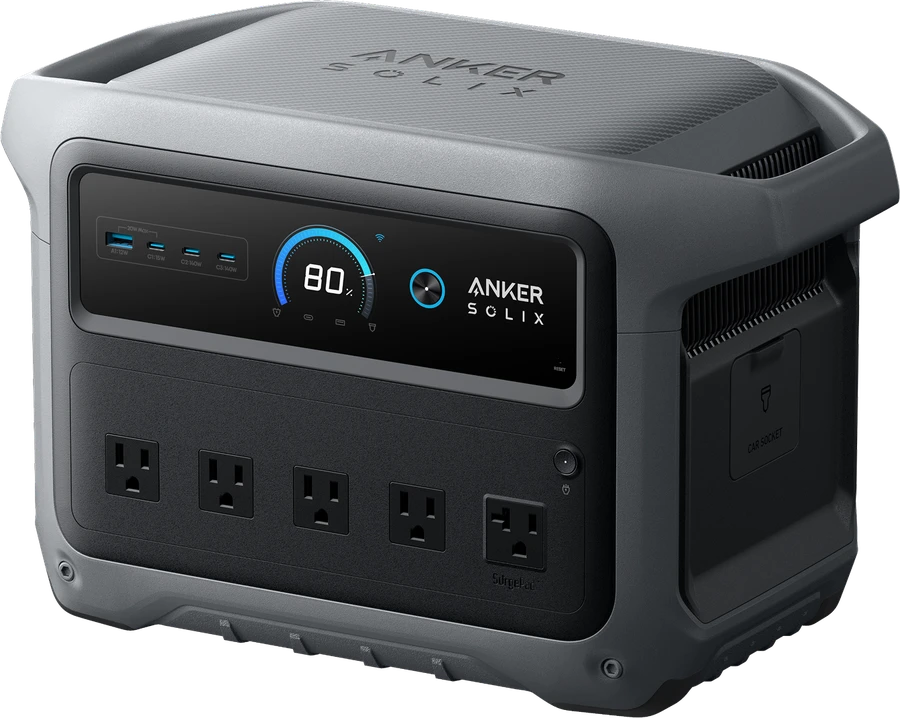
#14Anker SOLIX C1000 Gen 2 Portable Power Station

Also great

Anker SOLIX C1000 Gen 2

8.7/10
WattLab Score

Anker's C1000 Gen 2 puts 1,024Wh of LiFePO4 and a 2,000W inverter (3,000W surge) into a 24.9 lb box. It refills from the wall in 49 minutes with UltraFast Charging, takes up to 600W of solar and switches to battery in 10 ms.

  • 1,024 WhCapacity
  • 2,000 WAC output
  • LiFePO4Battery
  • 24.9 lbWeight

Pros: 2,000W continuous / 3,000W surge, high for 1kWh; Full recharge in 49 min with UltraFast Charging; Up to 600W solar input.

Cons: Can't add an expansion battery, unlike the original C1000; UltraFast Charging needs the app and a battery above 68°F.

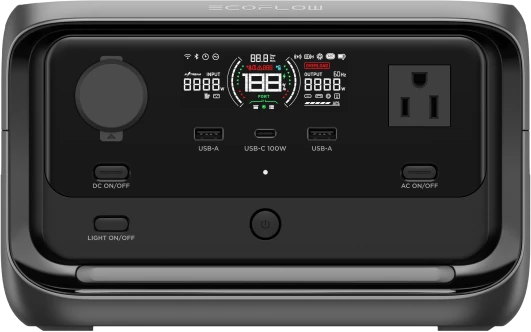
#15EcoFlow RIVER 3 Plus Portable Power Station with EB300 Extra Battery (572Wh)

Also great

EcoFlow RIVER 3 Plus + EB300

7.4/10
WattLab Score

The RIVER 3 Plus pairs a 286Wh LiFePO4 power station with a clip-on 286Wh EB300 battery for 572Wh in total. It switches to battery in under 10 ms, runs at about 30 dB and puts out 600W from three AC outlets.

  • 572 WhCapacity
  • 600 WAC output
  • LiFePO4Battery
  • 18.1 lbWeight

Pros: Under-10 ms UPS switchover, measured at 9 ms by StorageReview; 572Wh LiFePO4 across two clip-together units; About 30 dB, quiet enough for a bedroom or office.

Cons: 600W output limits it to small appliances; Charge times EcoFlow quotes are for the main unit only.

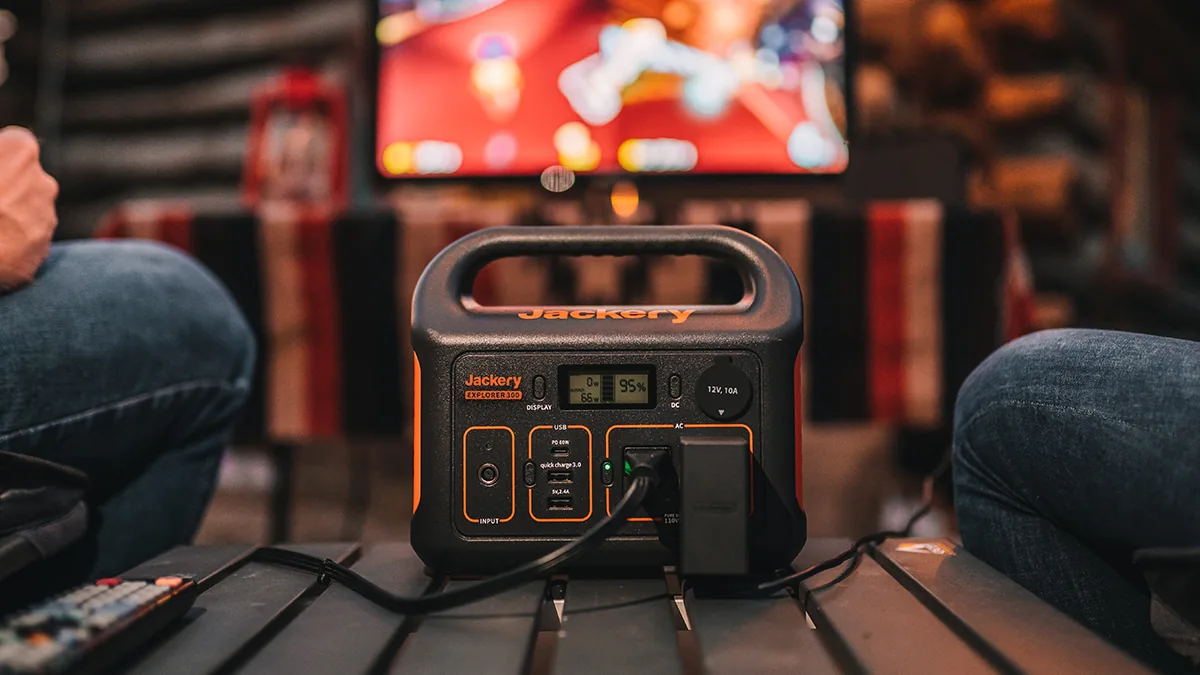
#16Jackery Explorer 300 Portable Power Station

Budget grab-and-go backup

Jackery Explorer 300

5.2/10
WattLab Score

Keeps phones, lights and a router going for a day. There's no UPS mode and its battery ages faster, so treat it as a light emergency-kit battery.

  • 293 WhCapacity
  • 300 WAC output
  • Li-ion (NMC)Battery
  • 7.1 lbWeight

Pros: Very light at 7.1 lb with a sturdy carry handle; USB-C PD port charges laptops and doubles as a 60W input; Dual charging (wall + USB-C) refills in about 2.5 hours.

Cons: Original NMC battery: ~500 cycles to 80%; 300W inverter can't run kettles, coffee makers or heaters.

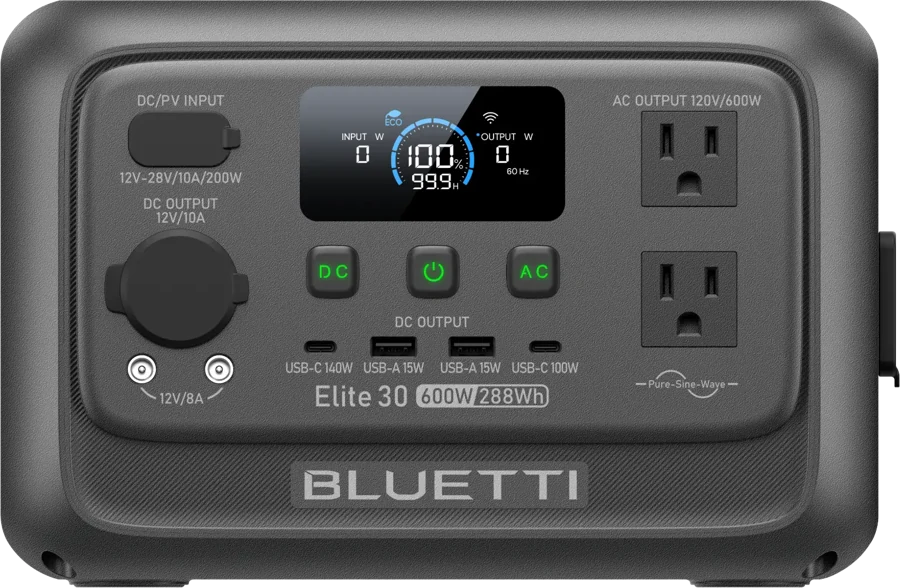
#17BLUETTI Elite 30 V2 Portable Power Station

Best UPS for router & CPAP

BLUETTI Elite 30 V2

8.0/10
WattLab Score

Too small for a fridge, but its ≤10 ms UPS switchover makes it a superb always-on backup for a modem, router or CPAP, and it takes up to 200W of solar.

  • 288 WhCapacity
  • 600 WAC output
  • LiFePO4Battery
  • 9.48 lbWeight

Pros: LiFePO4 battery rated for 3,000+ cycles; Full recharge from AC in about 70 minutes, no external brick; 140W USB-C PD 3.1 port fast-charges big laptops.

Cons: 288Wh is small for fridges or long outages; No battery expansion option.

Specs at a glance

ModelCapacityAC outputBatteryFastest chargeWeightScore
EcoFlow DELTA Pro Ultra X12,288 Wh12,000 WLiFePO4—292.6 lb7.1
Anker SOLIX E1012,288 Wh7,680 WLiFePO4—320.6 lb7.1
DABBSSON Turbo 1200010,648 Wh12,000 WLiFePO478 min—7.6
EcoFlow DELTA Pro 3 + Extra Battery8,192 Wh4,000 WLiFePO4——8.2
EcoFlow TITAN Plus + 800W Solar5,017 Wh7,200 WLiFePO4—121.3 lb6.8
EcoFlow DELTA Pro 34,096 Wh4,000 WLiFePO4—113.5 lb8.4
EcoFlow DELTA Pro3,600 Wh3,600 WLiFePO41.8 hr99 lb8.1
PECRON F3000LFP3,072 Wh3,600 WLiFePO41.5 hr63.3 lb8.9
EcoFlow DELTA 3 Max2,048 Wh2,400 WLiFePO4—44.8 lb7.3
DYNESS PPS24002,048 Wh2,400 WLiFePO42.3 hr48.5 lb8.0
BLUETTI AC1801,152 Wh1,800 WLiFePO478 min35.3 lb8.3
Jackery Explorer 1000 v21,070 Wh1,500 WLiFePO41 hr23.8 lb8.3
DJI Power 1000 V21,024 Wh2,600 WLiFePO456 min31.3 lb8.7
Anker SOLIX C1000 Gen 21,024 Wh2,000 WLiFePO449 min24.9 lb8.7
EcoFlow RIVER 3 Plus + EB300572 Wh600 WLiFePO4—18.1 lb7.4
Jackery Explorer 300293 Wh300 WLi-ion (NMC)2.5 hr7.1 lb5.2
BLUETTI Elite 30 V2288 Wh600 WLiFePO470 min9.48 lb8.0

Compare these in the interactive comparator

Appliance sizing table

ApplianceTypical running wattsTypical daily energy
Wi-Fi router + modem10–20W0.25–0.5 kWh
Smartphone (one charge)—~15 Wh
Laptop45–100W0.2–0.6 kWh
CPAP (no heated humidifier)30–60W0.25–0.5 kWh / night
LED light bulb8–12W~0.05 kWh
Full-size refrigerator100–200W avg (surge 600–1,200W)1–2 kWh
Chest freezer50–100W avg0.7–1.2 kWh
Microwave1,000–1,500Wshort bursts
Coffee maker800–1,200W~0.1–0.2 kWh
Space heater1,500Wimpractical on battery

Typical US ranges for planning only. Check the label on your own appliance for exact watts.

What makes a good home-backup unit

  • Capacity of 1,000Wh or more to keep a fridge going for several hours, or essentials for a day or more.
  • Continuous output of 1,500W+ with enough surge for compressor startup.
  • UPS / pass-through mode so devices stay plugged in and switch automatically.
  • Fast AC recharge to refill during brief grid returns.
  • Solar input of 200–400W+ for multi-day outages.

Solar math for multi-day outages

Each 100W of panels produces roughly 400–500Wh on a clear day in most of the continental US (less in winter and in northern states). Two 200W panels feeding a 1kWh station can roughly refill it on a good day, which is enough to keep a fridge cycling indefinitely if you're careful with other loads.

Frequently asked questions

Can a solar generator run a refrigerator?

Yes, a 1kWh-class station with a 1,500W inverter can run a typical full-size fridge for roughly 6–9 hours, longer if you keep the door closed. Smaller 300Wh units can't handle a fridge's startup surge reliably.

Is a solar generator better than a gas generator for home backup?

For essentials, often yes: it's silent, fume-free, safe indoors and has no fuel to store. Gas still wins for running many large loads for days; many homes combine both.