Winter storms bring the most dangerous kind of outage: long, cold, and often with roads you can't drive on. A portable power station won't replace your furnace, but it can keep food cold, phones charged, the internet up and medical devices running, quietly and safely inside your home.
Here's what a power station can realistically do in a winter outage, the cold-weather limits most owners don't know about, and how to choose the right size.
Why a battery power station, not a gas generator, indoors
Carbon monoxide poisoning is a leading danger during winter outages. The CDC is direct: don't use generators, grills or other gasoline-, propane- or charcoal-burning devices inside your home, garage or carport, and keep generators outside, at least 20 feet from doors, windows and vents. Ready.gov adds: never use a gas stovetop or oven to heat your home, and install working carbon monoxide detectors on every level.
A battery power station burns no fuel and produces no exhaust, so it's safe to run in your living room or bedroom. That's its biggest advantage in a winter storm, when going outside to refuel a generator may be the last thing you want to do.
What a power station can (and can't) run in winter
Heat is the hard part. Most plug-in space heaters are rated about 1,500 W on their high setting, according to EnergySage. Even a large 2 kWh station would run one for only an hour or so:
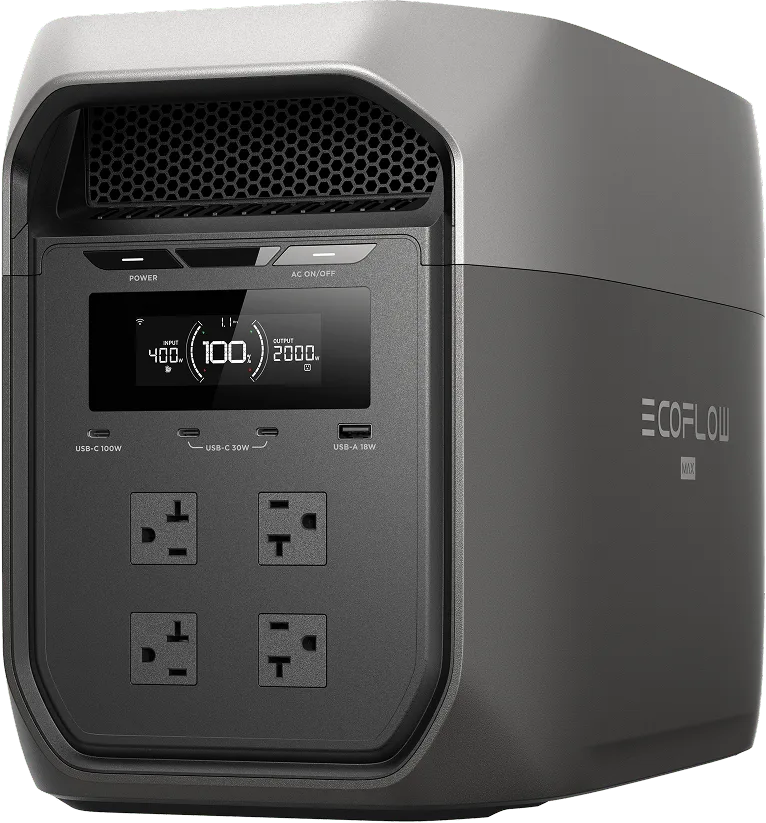
2,048 Wh × 85% ÷ 1500 W ≈ 1.2 hours on the EcoFlow DELTA 3 Max.
So don't plan to heat a room with a battery. Instead, put the energy where it goes furthest:
- Heated blankets and pads. They warm your body directly with a fraction of a space heater's power. Check the wattage on the label. A blanket rated 100 W would run for about 8.7 hours on a 1,024 Wh station, and far longer on its low setting.
- Your refrigerator. See our step-by-step guide: How Long Will a Power Station Run a Refrigerator? (The 3-Step Math).
- Internet and phones. A modem and Wi-Fi router drawing 15 W together would run for about 16 hours even on a small 288 Wh station.
- Medical devices. Ready.gov recommends talking to your medical provider about a power-outage plan for devices that need electricity. For CPAP machines, running without the humidifier cuts power use sharply.
- Lights. LED lamps use very little power and make a long night much easier.
A gas furnace still needs electricity for its blower and controls. Never improvise a connection to your home's wiring. Hooking any power source into a house circuit safely requires equipment installed by a licensed electrician.
Cold-weather limits: the thing most owners don't know
Most power stations use LiFePO4 batteries, and their manufacturers set strict temperature ranges, especially for charging. Charging below freezing is the risky case, so most models block it. Here's what the brands publish:
| Power station | Charging temperature | Discharge (use) temperature |
|---|---|---|
| Anker SOLIX C1000 Gen 2 | 32–104°F (0–40°C) | -4–104°F (-20–40°C) |
| Jackery Explorer 1000 v2 | 32–113°F (0–45°C) | 14–113°F (-10–45°C) |
| EcoFlow DELTA 3 Max | 32–113°F (0–45°C) | 14–113°F (-10–45°C) |
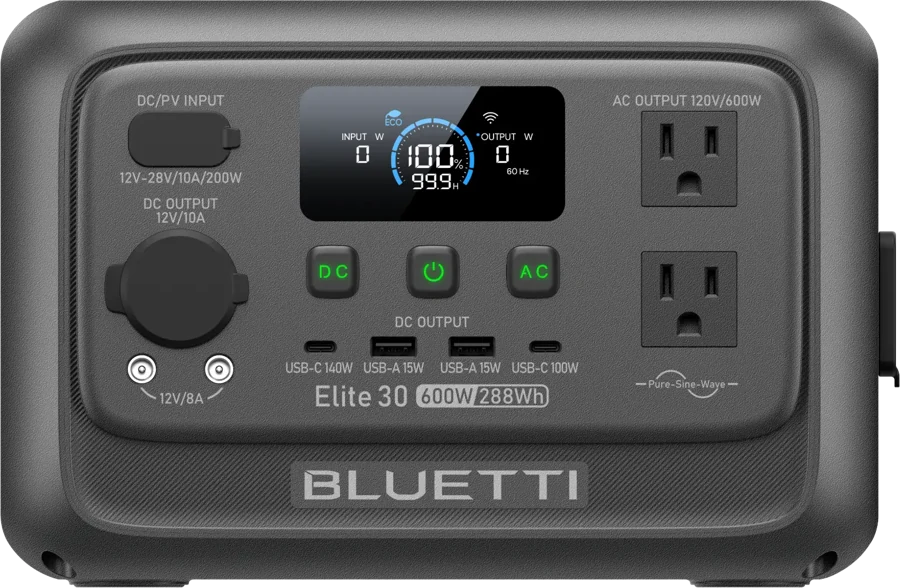
| BLUETTI Elite 30 V2 | 32–104°F (0–40°C) | -4–104°F (-20–40°C) |
In practice:
- Keep the station in the heated part of your home, not in a garage, shed or car overnight.
- If it has been in the cold, let it warm to room temperature before charging. Most will simply refuse to charge until they're warm enough.
- Expect slower charging when it's cool. Anker, for example, says the Anker SOLIX C1000 Gen 2 reaches its fastest UltraFast charging speed only when the battery is above 68°F.
- Winter solar is weaker. Short days and low sun mean solar panels will refill a station more slowly than the brand's quoted times, which assume ideal conditions.
Your winter storm checklist
- Charge to 100% as soon as a storm is in the forecast, and keep it plugged in. Most stations can work as a UPS, switching your router or fridge to battery automatically when the power drops.
- Make a power plan. List what you'll run and its watts. Prioritize: medical devices, fridge, communication, light, warmth.
- Test it before the storm. Plug in your fridge or blanket for an hour so you know it works and how fast the battery drops.
- Stock the low-tech backups: blankets, warm layers, flashlights, and a list of warming centers. Ready.gov advises going to a community location with power if the cold is extreme.
- Keep your fridge closed. It holds food safely for about four hours unopened; a full freezer about 48 hours (Ready.gov).
Common winter mistakes to avoid
- Leaving the station in the car or garage. Below its charging range it won't recharge from solar or the wall, and you may not find out until you need it.
- Using it to run a space heater all night. It will drain in about an hour and leave nothing for the fridge or phones.
- Waiting until the storm hits to charge it. Top it up as soon as the forecast turns, and keep it plugged in.
- Plugging heaters into power strips or extension cords. Plug high-power appliances directly into the station's AC outlet and keep them clear of bedding and curtains.
- Never testing it. A quick trial run tells you which devices work, how long the battery lasts, and whether you need a bigger unit.
A bit of planning goes a long way. Decide in advance which devices get power first, and you'll make a 1 kWh battery last far longer than if you plug in everything at once.
What size power station for a winter outage?
Phones, internet and a CPAP for one night: around 300 Wh
The BLUETTI Elite 30 V2 (288 Wh, 9.48 lb) is light enough to move from room to room.
Fridge overnight plus essentials: about 1 kWh
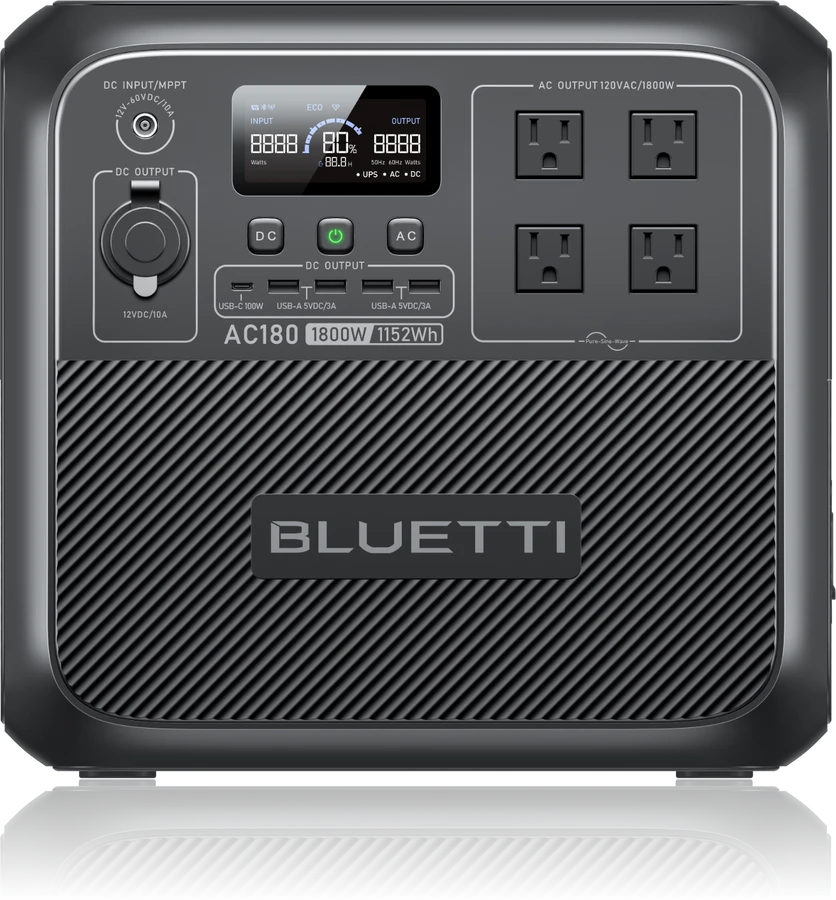
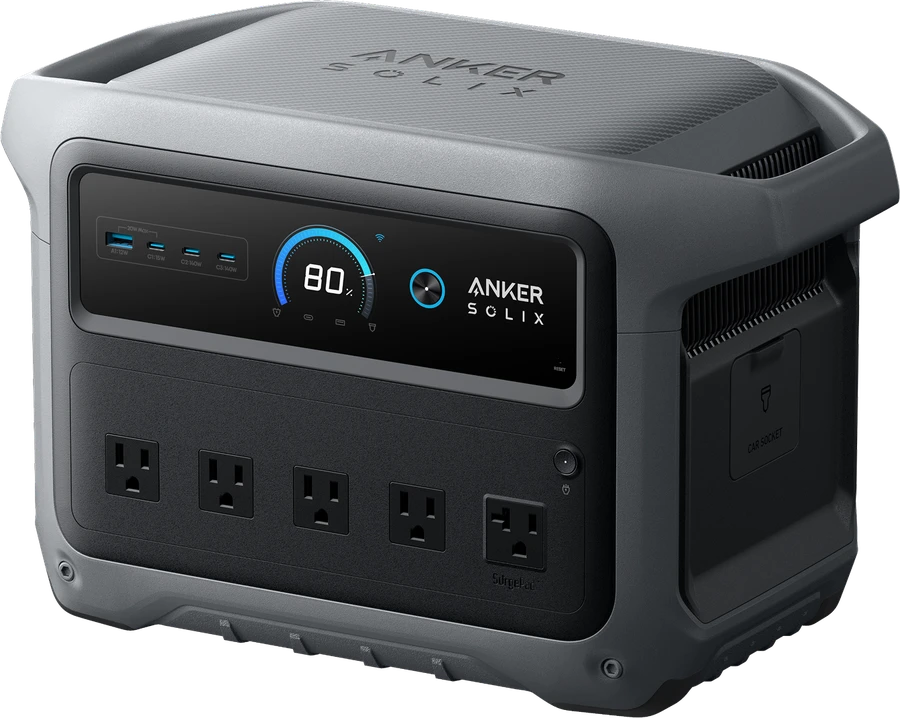
The Anker SOLIX C1000 Gen 2 (1,024 Wh) recharges in 49 min when the grid comes back between cuts, and the BLUETTI AC180 (1,152 Wh) offers more capacity for less money. See our head-to-head comparison.
Multi-day outages: 2 kWh and up
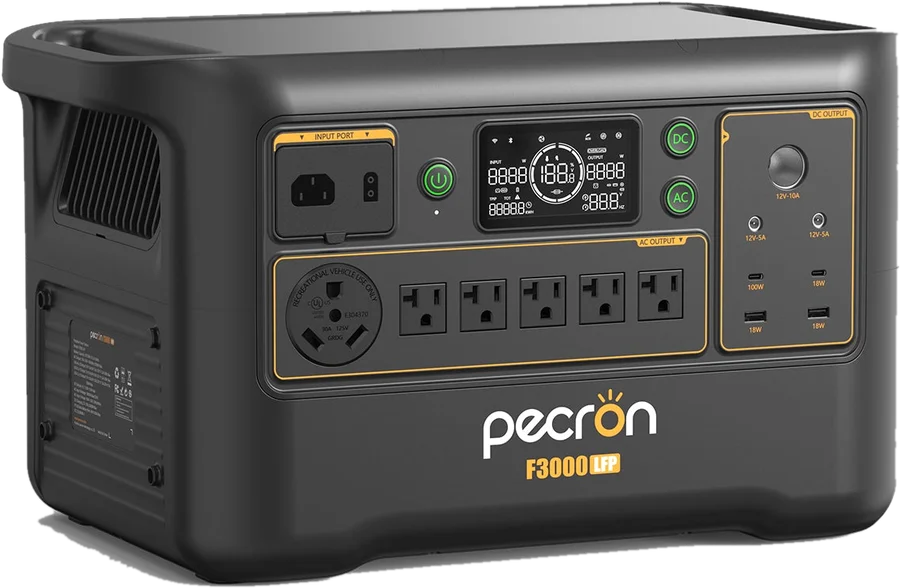
The EcoFlow DELTA 3 Max (2,048 Wh) and the PECRON F3000LFP (3,072 Wh) can carry a fridge, internet and devices for a day or more, and both take high solar input for daytime top-ups.
For a complete shortlist, see our best solar generators for home backup guide.
Frequently asked questions
Can I use a portable power station indoors during a winter outage?
Yes. Battery power stations burn no fuel and produce no exhaust, so they're safe indoors. That's the key difference from gas generators, which the CDC says must stay outside, at least 20 feet from doors, windows and vents.
Can a power station run a space heater?
Only briefly. A space heater on high draws about 1,500 W, so even a 2,048 Wh station runs one for about an hour. Heated blankets are a far more efficient way to stay warm on battery power.
Can you charge a power station in freezing temperatures?
Usually not. Most LiFePO4 models we list are rated to charge only from 32°F (0°C) and up. Keep the station in the heated part of your home and let it warm up before charging.
What should I power first in a winter outage?
Medical devices first, then the refrigerator, then communication (phone, modem and router), then lighting and a heated blanket.
Products in this article
BLUETTI
BLUETTI Elite 30 V2
The pocket-sized LiFePO4 pick with a real 600W inverter
- 288 WhCapacity
- 600 WAC output
- LiFePO4Battery
- 9.48 lbWeight
$289.99reference price*
Anker
Anker SOLIX C1000 Gen 2
The fastest-charging 1kWh station, with a 2,000W inverter
- 1,024 WhCapacity
- 2,000 WAC output
- LiFePO4Battery
- 24.9 lbWeight
$699.99reference price*
BLUETTI
BLUETTI AC180
A proven 1.1kWh all-rounder at a mid-range price
- 1,152 WhCapacity
- 1,800 WAC output
- LiFePO4Battery
- 35.3 lbWeight
$499.00reference price*
EcoFlow
EcoFlow DELTA 3 Max
2kWh of LiFePO4 with a 10 ms UPS at a 1kWh-class price
- 2,048 WhCapacity
- 2,400 WAC output
- LiFePO4Battery
- 44.8 lbWeight
$879.00reference price*
PECRON
PECRON F3000LFP
3kWh and 3,600W for well under $1,000
- 3,072 WhCapacity
- 3,600 WAC output
- LiFePO4Battery
- 63.3 lbWeight
$899.00reference price*
Sources
- CDC: Avoiding Carbon Monoxide Poisoning
- Ready.gov: Power Outages
- Anker SOLIX C1000 Gen 2: official specs (charging temperature, UltraFast charging)
- EnergySage: How many watts does a space heater use?
Product specs come from each manufacturer's official spec sheet, linked on our review pages. Runtime estimates use our published method: capacity × 85% ÷ device watts (how we calculate).
Keep reading
 How-to · Nov 13, 2026
How Long Will a Power Station Run a Refrigerator? (The 3-Step Math)
How long will a power station run a refrigerator? Find your fridge's real watts on its EnergyGuide label, then do the 3-step math. Runtime table included.
Read article
 Head-to-head · Nov 13, 2026
Anker SOLIX C1000 Gen 2 vs BLUETTI AC180: Which 1kWh Power Station Should You Buy?
Anker SOLIX C1000 Gen 2 vs BLUETTI AC180: capacity, output, charge speed, solar, weight and value compared spec by spec, plus which one to buy.
Read article